
Spotlight: Shivam Gusain: Engineering the Double Dividend
Designing systems where sustainability pays twice for business and the planet

When it comes to sustainability, most solutions tackle either environmental impact or economic return, rarely both.
Shivam Gusain, the mind behind the Double Dividend Protocol, is proving that the two can coexist. His systems-based framework connects chemistry, data, and design to deliver measurable decarbonization across manufacturing, enabling “profitability through proof.”
With COLOURizd and other innovators, Shivam is turning complex environmental goals into operational realities. In this GenuTrace Spotlight, he shares how the Double Dividend Protocol creates a blueprint for scalable sustainability, shifting the conversation from green claims to genuine results.
Q&A with Shivam Gusain, Creator of the Double Dividend Protocol
1. What inspired the creation of the Double Dividend Protocol?
Answer: The Double Dividend Protocol came from frustration with how sustainability was being practiced in the real world. I kept seeing technically valid solutions fail because they asked businesses to absorb permanent cost increases without changing the system that produced those costs in the first place.
Most sustainability efforts today are incremental. They optimise one variable in isolation, a material swap here, an offset there, while leaving the underlying energy, chemistry, and incentive structures untouched. That approach creates fragile progress. It looks good in reports, but it collapses under scale, volatility, or margin pressure.
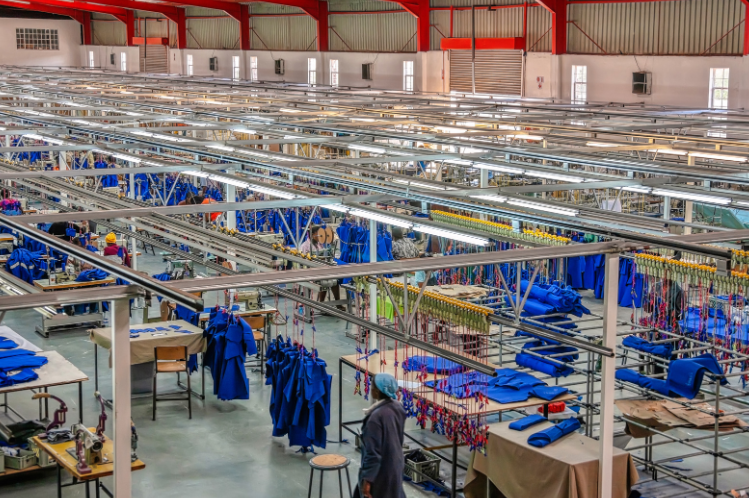
The protocol emerged from working inside factories, not slide decks. When you stand on a production floor long enough, patterns become obvious. There are interventions that reduce emissions and reduce operating costs at the same time, but they sit across silos. Energy teams do not talk to materials teams. Procurement does not talk to chemistry. Finance rarely talks to process engineers.
The Double Dividend Protocol is my attempt to reconnect those pieces into a single system where decarbonisation is not an expense, but a consequence of better design.
2. What exactly is the “Double Dividend”?
Answer: The Double Dividend is the idea that sustainability only scales when environmental performance and economic performance reinforce each other by design.

True sustainability must pay twice, once for the planet and again for the business that makes it possible.
The first dividend is environmental. Emissions fall, water use drops, toxicity decreases, and waste is reduced because processes are redesigned to use fewer inputs and generate fewer losses. This is achieved through changes in energy systems, chemistry, process control, and material efficiency, not through offsets or accounting adjustments.
The second dividend is economic. Those same interventions lower operating costs, reduce volatility, improve yields, and increase process reliability. The business becomes more resilient and more predictable as a direct consequence of better environmental performance.
What makes it a double dividend is not that two benefits exist, but that they are causally linked. The economic gains are not incidental. They are deliberately captured and redirected to finance the next layer of decarbonisation, such as cleaner materials, advanced chemistry, or deeper process upgrades that would otherwise face price barriers.
It is not about hoping premiums disappear someday. It is about engineering a financial feedback loop where improved environmental outcomes actively fund their own expansion.
3. How does the protocol connect to technologies like COLOURizd’s QuantumCOLOUR™?
Answer: Technologies like COLOURizd’s QuantumCOLOUR™ are a great fit for the protocol because they sit at the intersection of chemistry, energy, and process redesign.
QuantumCOLOUR™ reduces water, energy, and auxiliary chemistry demand at the process level. Those reductions are not theoretical. They show up as lower steam consumption, shorter cycle times, and reduced effluent loads. That is a measurable operating margin.
Within the Double Dividend framework, those verified savings are not treated as passive efficiency wins. They become active financial levers that can be redirected to enable cleaner inputs, higher-quality fibres, or deeper decarbonisation elsewhere in the value chain.
This is how innovation should scale. Not by asking brands to pay more forever, but by embedding new technologies into systems that make better outcomes economically inevitable.
4. You’ve said that sustainability is a systems design problem, not a marketing challenge. Can you expand on that?
Answer: Marketing can explain sustainability, but it cannot create it.
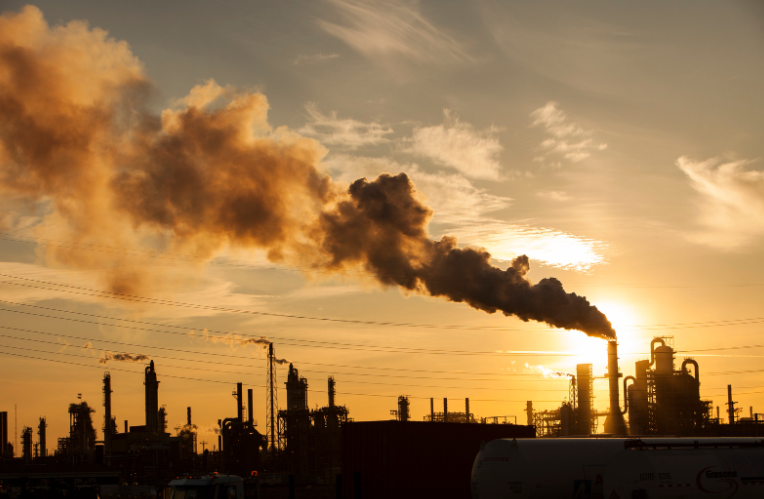
Emissions, water use, toxicity, and waste are physical outcomes of how systems are designed. They are governed by thermodynamics, chemistry, logistics, and incentives, not narratives.
When sustainability is treated as a branding exercise, companies end up optimising claims rather than outcomes. When it is treated as a systems design problem, attention shifts to flows of energy, materials, and money. That is where real leverage exists.
The Double Dividend Protocol forces uncomfortable but necessary questions.
Sustainability is not just a branding exercise . . .
Where does value leak out of the system? Where do savings accumulate but go unused? Where are incentives misaligned between buyers and makers?
Once you design those frictions out, sustainability stops being something you promote and starts being something that simply happens.
5. Measuring decarbonization at scale is complex. How does your framework make it practical?
Answer: Measuring decarbonisation at scale only feels complex because we have chosen to measure it in the wrong place.
The framework treats carbon the same way factories already treat cost, yield, and throughput. As a physical consequence of production, not as a downstream reporting exercise. Carbon is the result of energy flows, material transformations, and process inefficiencies. If you can measure those reliably, you can measure carbon reliably.

Carbon is not an abstract idea . . .
We need to stop treating carbon as an abstract idea. It is a measurable material flow that moves through boilers, dye machines, dryers, chemical reactions, and logistics systems. Once you see it that way, decarbonisation becomes an engineering problem rather than an accounting one.
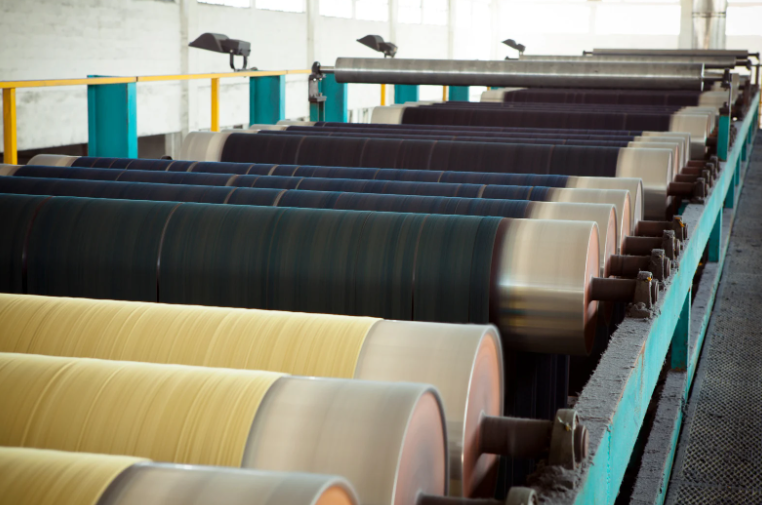
In practice, the framework starts at the process level rather than the product level. Instead of relying on industry averages or annualised footprints, it establishes baselines for specific operations such as steam generation, liquor ratios, bath reuse, chemical dosing, drying times, and rework rates. These are parameters factories already track because they affect cost and quality.
When an intervention is introduced, the change is verified through operational data rather than assumptions. Reduced steam demand shows up in fuel consumption. Shorter process times show up in machine utilisation. Lower chemical demand shows up in purchasing and effluent loads. Emissions reductions are calculated from these first order changes, not inferred after the fact.
These verified data streams can then be integrated into traceability platforms like GenuTrace, where facility level performance, process changes, and material provenance are connected across the supply chain. This creates continuity between what happens on the factory floor and what is reported upstream to brands and downstream to regulators.
The objective is not to generate more reports. It is to remove uncertainty. When decarbonisation data is embedded directly into operational systems, scale becomes manageable. You are no longer chasing emissions after production. You are preventing them through design, process control, and verifiable proof.
6. What are the biggest misconceptions about scaling low-impact manufacturing?
Answer: The biggest misconception is that scale automatically makes sustainable technologies cheap.
In reality, materials and processes behave very differently from energy systems. Many low-impact solutions carry structural costs related to feedstocks, purity requirements, or process constraints that do not disappear with volume alone.
Another misconception is that adoption fails because manufacturers resist change. In most cases, manufacturers are rational. They operate under tight margins, volatile orders, and asymmetric risk. If a solution increases cost without protecting competitiveness, it will not scale.
The protocol addresses this by shifting the question from “is this greener?” to “does this make the system stronger?” When sustainability improves resilience, predictability, and margins, adoption follows naturally.
7. How can brands and manufacturers start applying this approach now?
Answer: For this approach to work, suppliers must lead. They are the ones closest to the processes, the constraints, and the real opportunities for improvement. Brands play a critical role, but they cannot identify double dividends from a distance.
The first step sits with the supplier. Facilities need to map their core process flows and identify where energy, water, chemistry, time, and quality losses occur. This is not a sustainability exercise. It is an operational one. Boilers, dye machines, finishing lines, rework loops, and effluent treatment all reveal where cost and emissions are structurally linked.

Brands and Suppliers need to collaborate
Once these leverage points are visible, suppliers can propose interventions that improve process performance and reduce environmental impact at the same time. This might involve process redesign, chemistry changes, equipment upgrades, or control improvements. The key is that these opportunities are defined by the factory, not prescribed externally.
The second step requires alignment with brands. Brands need to recognise that these interventions create value beyond compliance and should commit to sharing in both the risk and the upside. This can be done by agreeing in advance how verified operating savings will be captured and reinvested, whether into cleaner inputs, improved materials, or further process upgrades.
Verification comes next. Suppliers measure changes using operational data they already trust, such as fuel consumption, machine utilisation, chemical purchasing, and defect rates. These data form the basis for credible decarbonisation claims and financial accounting.
Finally, scale happens when successful loops are repeated. Once a supplier proves that a specific intervention delivers lower emissions and stronger economics, the same logic can be applied across additional lines, products, or facilities. Brands benefit from reduced footprint and improved supply resilience, while suppliers strengthen their competitiveness.
The shift is subtle but critical. Brands stop dictating solutions, and suppliers stop being treated as passive executors. Instead, suppliers become system designers, and brands become partners in scaling what actually works.
8. Looking ahead, how do you see system design and traceability converging?
Answer: System design and traceability are moving toward the same destination from opposite directions.
System design frameworks like the Double Dividend Protocol define how production systems should function if they are to be efficient, resilient, and low impact. They focus on how energy, materials, chemistry, and incentives are structured so that better environmental performance emerges naturally from better operations.
Traceability systems approach the problem from the other side. They focus on evidence. They track provenance, process conditions, transformations, and outcomes across facilities and products. On their own, they describe what happened, but they do not change why it happened.
The convergence happens when these two layers are deliberately connected. System design defines the rules of the game. Traceability verifies that those rules are being followed in practice. When that connection exists, accountability no longer relies on interpretation or trust. It is built into the architecture of the system itself.

System design and traceability are converging . . .
As forensic methods, digital product passports, and facility level data streams mature, performance becomes increasingly difficult to obscure or exaggerate. Environmental outcomes, operational efficiency, and compliance begin to reinforce each other because they are drawing from the same underlying data.
When systems are transparent, performance becomes self-evident. That is the real dividend, trust.
In that future, sustainability stops functioning as a differentiator or a marketing advantage. It becomes the baseline expectation for any system that wants to remain competitive, credible, and scalable.
The Double Dividend Protocol is more than a framework — it’s a mindset shift. It challenges every brand to build value where environmental and economic performance reinforce each other. As Shivam reminds us, “stop marketing sustainability — start making it.” The next era of decarbonization will belong to those who design systems that make proof automatic.

About Shivam Gusain
Shivam Gusain is the creator of the Double Dividend Protocol, a systems-based framework for decarbonization and value creation across global supply chains. With expertise spanning chemistry, design thinking, and sustainability analytics, he collaborates with innovators such as COLOURizd and GenuTrace to embed measurable impact into the fabric of manufacturing. His work helps brands turn sustainability from a marketing claim into a performance standard.
