
Frankincense: Follow the Star - The First Christmas Gift is Perfect for Christmas 2025
In the Christmas story, the gift of frankincense by the Magi to the infant Jesus was a gift of one of the most precious substances in the ancient world. Tradition tells us that frankincense, with its sweet and sacred aroma, represents divinity evoking the feeling of peace and well-being, which makes it something special.
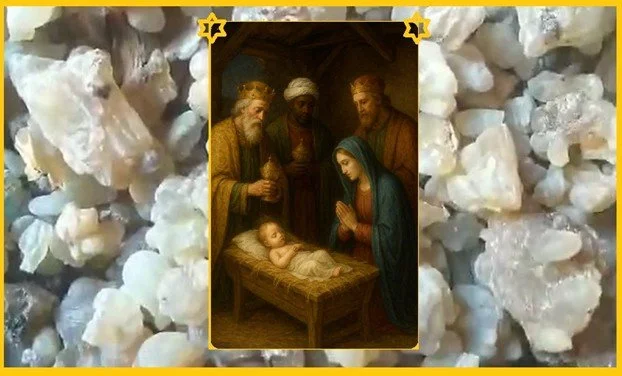
Even in today's World, thousands of years since that first Christmas, Frankincense continues to captivate us, not merely for its pleasant scent, but for the remarkable properties that have sustained its relevance across millennia.
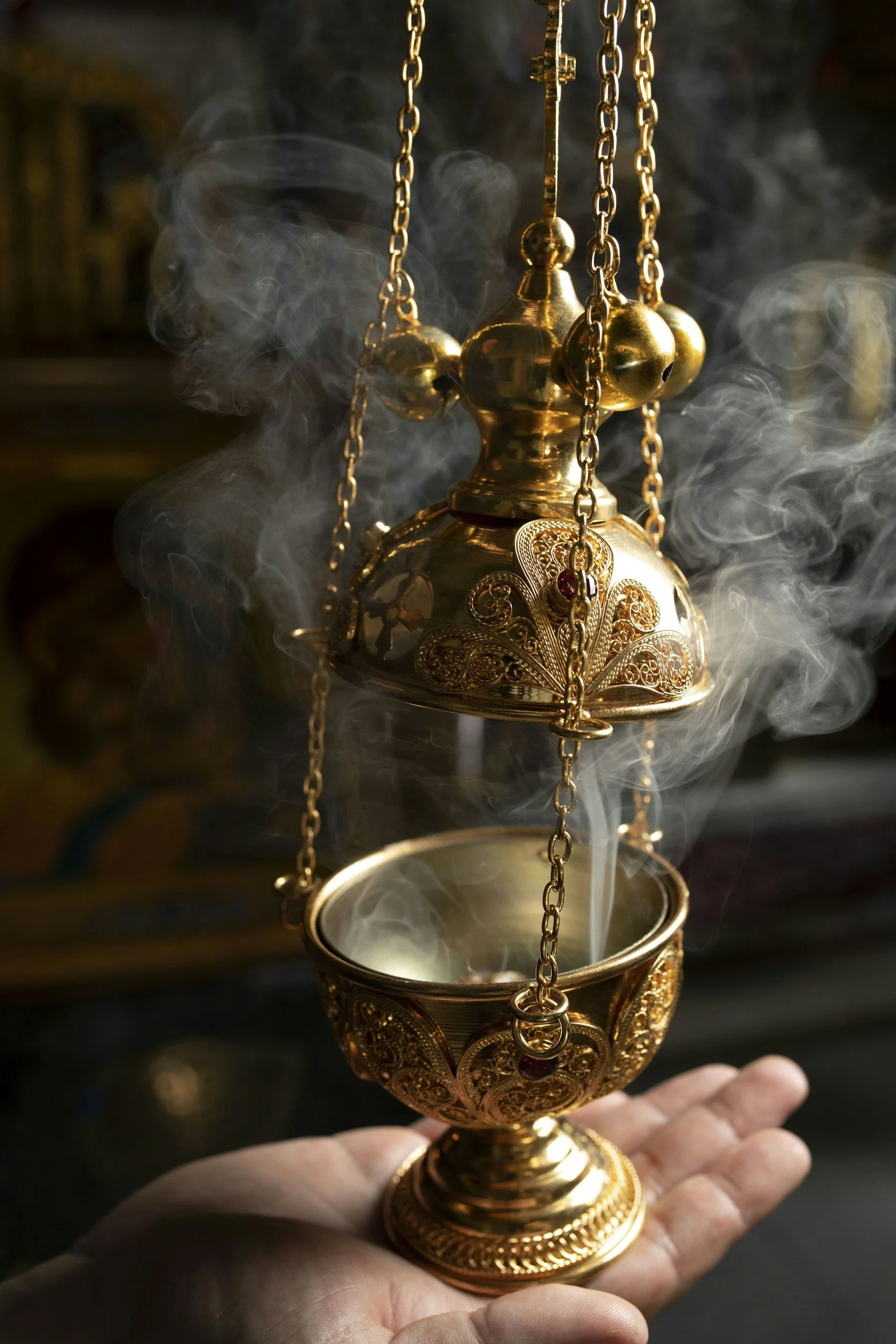
An Ancient Treasure
Since time immemorial, Frankincense has been valued and traded. The ancient Egyptians, Babylonians, and Assyrians all prized frankincense. Temple reliefs from the time of Queen Hatshepsut, (around the fifteenth century BC), show small frankincense and myrrh incense trees being transported back to Egypt from the Land of Punt (thought to be the Horn of Africa/Somalia region). Today, the rare and treasured Maydi Frankincense found exclusively on the steep vertical slopes of coastal Northern Somalia is considered superior to other varieties ¹.
Throughout the ancient world, frankincense served numerous purposes. The Egyptians burnt large amounts in religious ceremonies. Interestingly, when King Tutankhamun's tomb was opened in 1922, more than 3,300 years after his burial, the smell of frankincense was still heavy in the air. The Greeks used frankincense to honour their heroes, while Romans used it to cure soldiers’ skin infections and bruises. In ancient Israel, frankincense was a required ingredient in temple grain offerings, creating what Scripture describes as “a soothing aroma to the Lord.”
Much More Than Just a Simple Sweet Smell
If frankincense was solely a sweet smell, then why has it remained irreplaceable for thousands of years? After all, over the centuries, countless other sweet-smelling substances have been discovered, yet none has supplanted frankincense. The answer must lie in frankincense’s other properties.
Premium skin care products include frankincense for its powerful antioxidant properties², which help protect and maintain healthy youthful skin. Formulators, like the ancients, also find frankincense's antimicrobial³ and calming properties useful. In Aromatherapy the scent of frankincense is said to promote relaxation, reduce stress and anxiety, enhance emotional well-being and aid concentration and meditation. In perfumery, frankincense acts as a base note and a fixative, which helps anchor more volatile fragrance ingredients and prevents them from evaporating too quickly, ensuring the scent lasts longer. Frankincense’s complex Scent Profile is not linear but evolves through various notes, from citrus (lemon/fruity) and subtle spice via heart notes that are rich, balsamic, and earthy to warm, woody, and slightly smoky notes with a hint of sweetness, that provide depth and longevity to the fragrance. This rich and adaptable profile allows it to blend seamlessly with a wide range of other ingredients, including woods, spices, florals, myrrh, and citrus oils, enhancing both masculine and feminine blends.
Modern Science Meets Ancient Wisdom
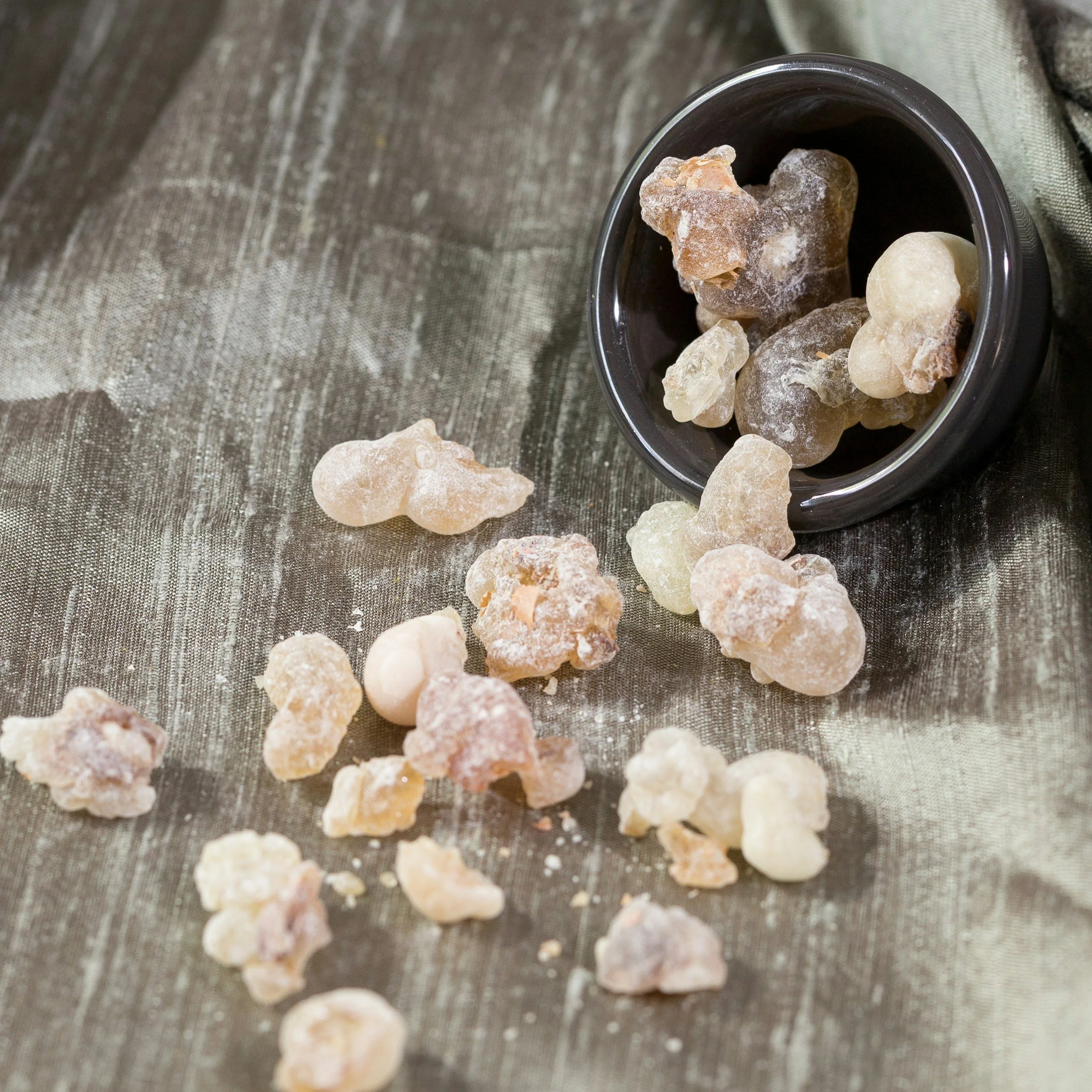
Modern research is revealing that frankincense contains powerful bioactive compounds. The most significant actives present in Frankincense are the boswellic acids, particularly acetyl-11-keto-β-boswellic acid (AKBA). Boswellic acids have anti-inflammatory properties, in particular, they inhibit leukotriene biosynthesis⁴. Ongoing studies suggest that there are compounds in frankincense that can induce apoptosis (programmed cancer cell death) in senescent cells without affecting healthy cells and so have a part to play in improving skin's healthspan⁵.
The Scale of Trade: Then and Now
At its height between 300 BC and 200 AD, it is said that the southern Arabia was shipping more than three thousand tons of incense each year to the Mediterranean world. Today, the frankincense market continues to thrive. The global frankincense essential oil market was valued at approximately $253 million in 2023 and is expected to reach $479 million by 2032⁶. Approximately 90% of the world's frankincense production now comes from the Horn of Africa. The rise of aromatherapy, natural health products, and premium skincare is driving this demand for high-quality frankincense and compensating for the decline in religious use.
A Word of Caution
Authentication is challenging due to similarities between species, and a growing dark economy along with increasing financial pressures creates temptation to adulterate commercial frankincense. When purchasing frankincense products, it is important to work with companies such as Derman Oil who insist on full supply chain transparency supported by reliable data from the experts at GenuTrace. If a supplier claims it., make sure they can prove it!⁷.
The Perfect Gift for Christmas 2025
As we approach this Christmas and Thanksgiving season, consider giving fragrances and skincare products containing frankincense to the extra special people in your life. You will be giving a gift that echoes the very first Christmas, when the Magi recognized something divine and offered treasures worthy of a king.
Frankincense-based products connect us to thousands of years of human history, from ancient temples to cutting-edge scientific research. It's a gift that says: "You are worth something truly precious, something that has been valued across all of human civilization."
Whether in the form of essential oils for aromatherapy, luxurious skincare serums, or exotic fragrances, frankincense continues to offer its ancient benefits to modern recipients. This Christmas, give more than a gift. Give a piece of history, a touch of the sacred with the science backed efficacy that has made frankincense treasured for over four and a half thousand years.
References
https://www.dermanoil.com/products/
Assaggaf, H. Deciphering the Antibacterial Therapeutic Effect of Boswellia carterii Essential Oil: DFT, Molecular Docking, and In vitro Investigation. Arab J Sci Eng (2025). https://doi.org/10.1007/s13369-025-10831-5
Borotová P, Čmiková N, Galovičová L, Vukovic NL, Vukic MD, Tvrdá E, Kowalczewski PŁ, Kluz MI, Puchalski C, Schwarzová M, et al. Antioxidant, Antimicrobial, and Anti-Insect Properties of Boswellia carterii Essential Oil for Food Preservation Improvement. Horticulturae. 2023; 9(3):333. https://doi.org/10.3390/horticulturae9030333
Banno, N., Akihisa, T., Yasukawa, K., Tokuda, H., Tabata, K., Nakamura, Y., Nishimura, R., Kimura, Y., Suzuki, T. Anti-inflammatory activities of the triterpene acids from the resin of Boswellia carteri. Journal of Ethnopharmacology, Volume 107, Issue 2, 2006, Pages 249-253. https://doi.org/10.1016/j.jep.2006.03.006
Dadé, M.M., Prieto, J., Francini, F., Schinella, G.R. Apoptotic Activity Of Boswellia Carterii Extract On Human Neutrophils. Journal of Natural Products Discovery, January 2024. ISSN: 2755-1997
https://www.snsinsider.com/reports/frankincense-oil-market-4966
