
From Narrative to Evidence: Women Advancing Truth Across Industries
By MeiLin Wan
Editor’s Note: In recognition of International Women’s Day, we highlight three women whose work is helping reshape how industries approach accountability, transparency, and scientific verification in global supply chains.
International Women’s Day is a moment not only to celebrate achievement, but to recognize influence. Across industries, women are helping reshape how accountability, transparency, and scientific verification are understood in global supply chains. They are raising standards, strengthening accountability, and redefining what leadership looks like in complex global systems.

In trade, compliance, science, and governance, the conversation has shifted.
Claims are no longer enough. Documentation alone is no longer sufficient. Increasingly, integrity requires evidence.
The women we highlight today exemplify this shift, each in her own domain, each reinforcing the same underlying principle: transparency is not a slogan; it is a discipline.
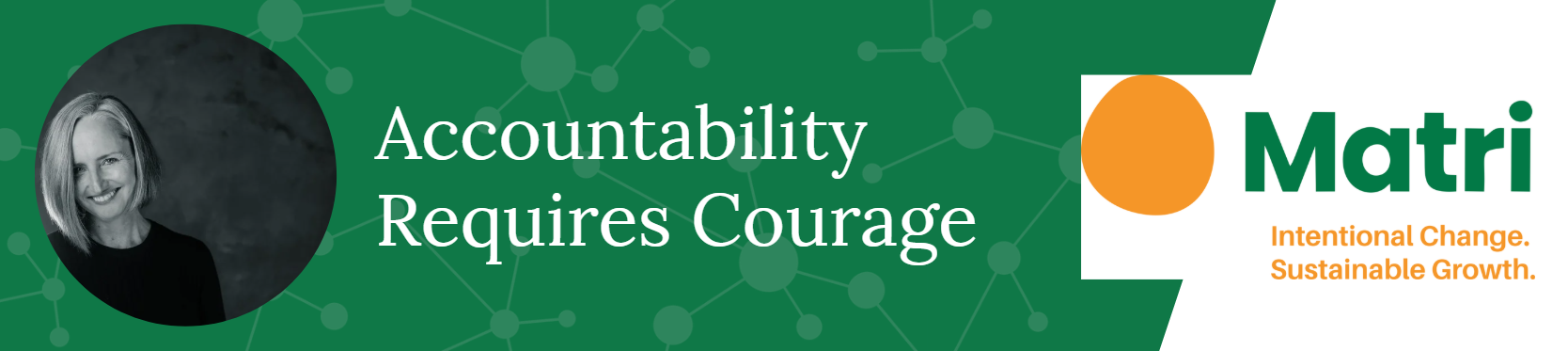
“Due diligence is not a paperwork exercise — it is a commitment to truth. In the fight against forced labor, accountability requires the courage to follow the evidence wherever it leads.”
— Kelly Thompson, Matri World
In the evolving regulatory landscape, from forced labor enforcement to import restrictions, due diligence has moved from compliance formality to operational responsibility. Kelly Thompson’s work reflects a reality many companies now face: systems designed to document risk must also be prepared to confront it and act when the evidence demands it.
True due diligence is not about assembling binders of certifications or relying on supplier declarations. It is about interrogating assumptions, identifying gaps, and acting when inconsistencies appear. It requires a willingness to look beyond surface representations of compliance and ask harder questions.
In the context of forced labor enforcement, that often means tracing materials deeper than companies once expected. It means understanding not only who your suppliers are, but who your suppliers’ suppliers are and what evidence supports each link.
Due diligence is not a paperwork exercise … it is a commitment to truth
Following evidence wherever it leads demands leadership. It may reveal uncomfortable findings. It may require changes in sourcing. It may challenge long-standing commercial relationships. But without that courage, accountability remains theoretical.
Women like Kelly are helping reframe due diligence as an ethical commitment, not just a regulatory obligation.

“True transparency requires vigilance and discipline. It means more than keeping written records and relying on trust. Transparency must be grounded in measurable key characteristics of the raw material, and supply-chain integrity validated by real data, not just narrative.”
— Dr. Barbara Brockway, Barbara Brockway Consulting
Transparency is often discussed as a communication strategy. In reality, it is a systems strategy.
Dr. Brockway highlights a critical tension in modern supply chains: the gap between narrative and material truth. Digital systems, certifications, and reporting platforms have made information more visible than ever. But visibility does not automatically equal verification.
Discipline means aligning what is claimed with what can be substantiated. It means ensuring that data about origin, composition, or sustainability is anchored in the physical attributes of the product itself.
Protecting the integrity of raw materials is foundational. Isotope Testing for Origin verification ensures that what is claimed in documentation is consistent with the material itself. If the material entering a system is misrepresented, intentionally or unintentionally, every subsequent data point inherits that flaw. Transparency, therefore, must begin at the material level.

Isotope testing for origin verification ensures that what is claimed is consistent with the material itself.
This is where disciplined verification strengthens trust. When supply-chain records are supported by material testing, isotopic signatures, or molecular markers, transparency becomes measurable. It moves from storytelling to substantiation.
Dr. Brockway’s perspective reminds us that integrity is not accidental. It is built through consistent standards, repeatable processes, and a refusal to rely on narrative alone.

“Science changes the conversation. Whether through DNA, isotopes, or other material testing technologies, verification moves from assumption to measurable fact — and that shifts accountability entirely.”
— Dr. Deirdre Killebrew, Innovative Genomics Institute Scientist and Research Manager.
At the frontier of traceability, science is transforming how claims are evaluated.
Historically, supply-chain verification relied heavily on documentation — bills of lading, certificates of origin, transaction records. While essential, documents can only attest to what is declared. They do not independently confirm what is materially present.
Scientific verification introduces a different standard. It enables claims about origin and authenticity to be evaluated against the material itself — not just the records that accompany it. DNA markers, isotope testing, and other science-based traceability methodologies enable objective assessment of origin and composition. They provide measurable indicators that are independent of paperwork.
When verification moves from assumption to measurable fact, the dynamic shifts. Discussions about origin, authenticity, and compliance become evidence-based. Disputes can be resolved through data. Risk assessments become more precise.
Science does not eliminate complexity — global supply chains remain intricate and multi-layered. But it narrows uncertainty. It introduces a layer of accountability that is difficult to dispute because it is grounded in the material itself.
Dr. Killebrew’s work underscores a powerful reality: when science enters the equation, expectations rise. Companies can no longer rely solely on what is said. They must be prepared to demonstrate what is true.

Science-based traceability enables objective assessment of origin and paperwork.
Raising the Standard Together
The common thread connecting these leaders is not simply expertise. It is conviction.

An Evidence Ecosystem combines multiple forms of proof, all working together to validate what is claimed.
Each, in her own domain, due diligence, raw material integrity, scientific verification, is contributing to a broader transformation in how industries think about accountability. These disciplines are not isolated. When combined, they form what can be described as an evidence ecosystem, a system in which multiple forms of proof reinforce one another, documentation, digital traceability systems, and material testing all working together to validate what is claimed.
In an evidence ecosystem, paperwork is not abandoned, it is strengthened. Digital traceability systems are not dismissed, they are anchored in material reality. Scientific testing does not replace governance, it supports it.
This transformation is not about technology alone. It is about mindset. It is about moving from assumption to evidence, from narrative to measurable fact, from compliance optics to genuine integrity.
On International Women’s Day, we celebrate not only participation, but leadership. The women advancing these conversations are strengthening the systems that underpin global trade and supply chains, helping to build environments where transparency is verifiable and accountability is measurable.
Integrity requires courage. Transparency requires discipline. Science requires curiosity.
Together, these principles are reshaping the standard of proof. And that is something worth celebrating.
About GenuTrace
At GenuTrace, we believe traceability is not a marketing claim, it is a standard of proof.
We work across cotton, textiles, and other raw materials to strengthen origin verification through science-based solutions, combining material testing technologies with disciplined supply-chain data systems. Our collaborative approach is technology-agnostic and evidence-driven, because credibility depends on substantiation.
As regulatory expectations rise and global trade faces increasing scrutiny, companies face a simple but powerful question:
If you claim it, can you prove it?® GenuTrace ensures you can.
Learn more about GenuTrace’s evidence-based traceability approach.
