From Documentation to Digital Identity: How Kinset Is Making Connected Products Accessible to Every Brand
GenuTrace Insights | June 2026
Kinset recently opened its connected product platform to any brand, anywhere. What is it, and why does it matter for supply chain transparency?
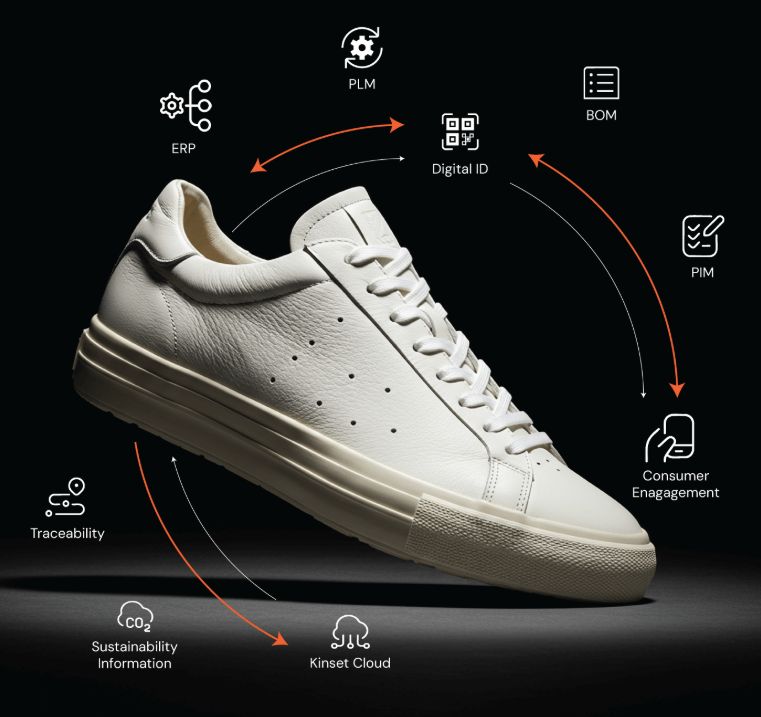
Kinset is a Dublin-based platform that transforms static barcodes and QR codes into smart labels and Digital Product Passports, giving every physical product a living digital identity that can be updated, verified, and shared across the supply chain. Until now, tools like this were largely the domain of enterprise brands with dedicated compliance teams and significant implementation budgets. Kinset changes that. Any brand, fashion, food, beauty, homeware, consumer goods, can now create connected products and start building their compliance foundation in minutes.
For supply chain businesses, the platform also enables verified product data to be shared directly with brand partners, closing a gap that has long kept traceability fragmented.
Who built it, and what's the origin story?
Kinset was co-founded by Katie O'Riordan and Alan Giles, a pairing that, in retrospect, looks inevitable. Katie spent over two decades working across fashion and consumer goods, including twelve years running her own brand, Theo + George. She wasn't an observer. She was the person making sourcing, product, and sustainability decisions, and she saw firsthand how product information trapped in silos enables greenwashing, obscures supply chains, and leaves brands with genuine stories unable to tell them in any verifiable way.
When EU Digital Product Passport regulations began taking shape, she recognized immediately that founders like her, brands with deep supply chain knowledge but no compliance infrastructure, would be the ones left behind.
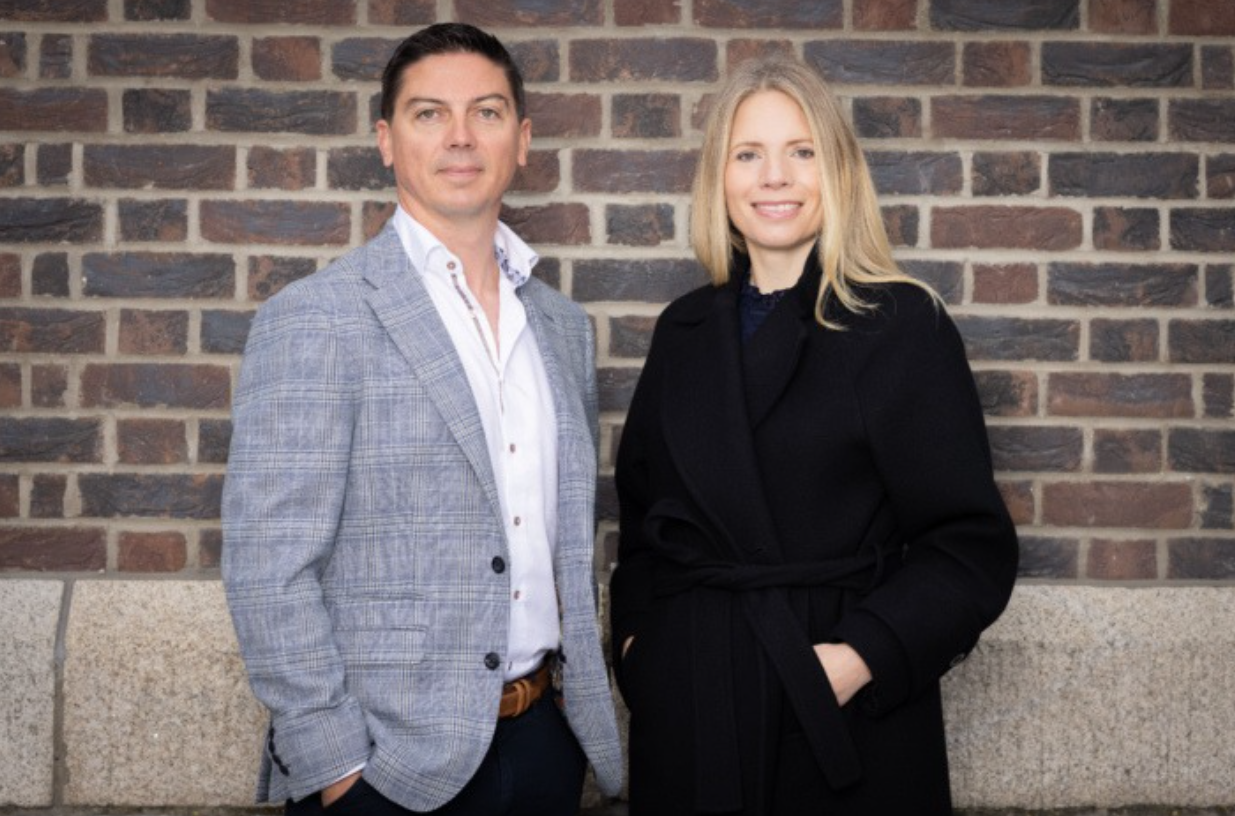
Alan brought the technical architecture to match that vision. As the engineer behind Kinset's platform, he built a system that is product-agnostic, GS1-compliant, and designed from the ground up to evolve alongside regulation rather than scramble to catch up with it.
What makes them work is the combination of lived industry experience and technical precision. Katie knows exactly what a founder needs because she was one. Alan knows how to build for where regulation is heading because he's embedded in the working groups shaping it. Together, they've built something neither could have built alone: a platform that is as practical for a small brand getting started today as it is ready for the compliance landscape of the next decade.
What is a Digital Product Passport, and why should brands care now?
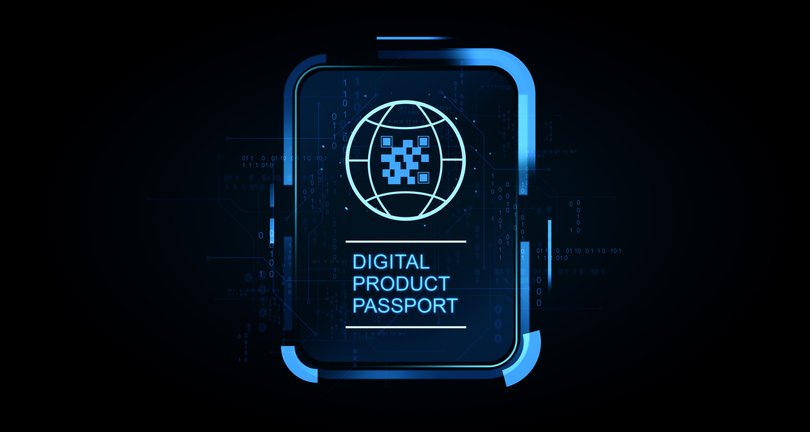
A Digital Product Passport is a structured digital record linked to a physical product, capturing information about its materials, origin, production, and end-of- life handling. The EU has moved DPPs from pilot to enforcement, and major retailers are already replacing traditional barcodes with smart labels that carry this kind of data.
For brands that treat compliance as a last-minute checkbox, the window is shorter than it looks. For brands that see it as an opportunity to build a more transparent relationship with their customers, the infrastructureis ready now.
“We built Kinset specifically so that a founder or a small team could get started without a six-figure budget or a dedicated sustainability director. You can create your first smart label in minutes and grow your compliance infrastructure from there. The platform is designed to meet brands where they are today and scale with them as requirements evolve, whether that's EU DPP mandates, retailer requirements, or customer expectations around transparency.”
— Katie O'Riordan, CEO & Co-Founder, Kinset
How does Kinset connect to what GenuTrace does?
Digital Product Passports create the structure for product claims. Scientific verification is what makes those claims defensible. But the integrity of that structure matters too, and this is where Kinset is fundamentally different from other DPP providers.
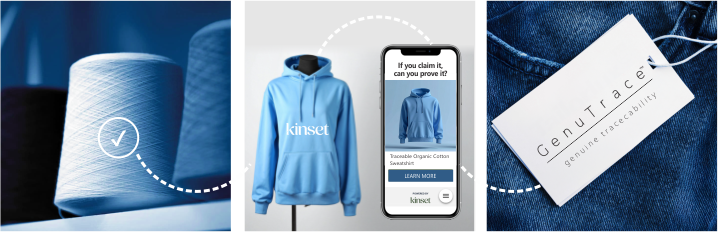
Kinset develops and customizes the platform in-house. There is no sub-contracting to multiple third parties, no handoffs between vendors, and no loss of accountability in the middle. What a brand configures is what gets built, by the same team, end to end.
For GenuTrace, that matters. When isotope-verified origin data is incorporated into a Digital Product Passport, the chain of custody has to hold from the lab to the label. A platform built and owned by a single team is the only way to guarantee that.
"Traceability only works when every link in the chain is accountable. Our collaboration with GenuTrace is built on exactly that principle. Kinset manages and owns the digital infrastructure, and GenuTrace provides the scientific verification behind the origin claim. Together, brands get a complete, defensible story from field to product page. That's not something you can piece together from multiple sub-contracted vendors."
— Katie O'Riordan, CEO & Co-Founder, Kinset
This is the distinction that matters in a world of tightening enforcement: documentation tells a story, but science proves it.
Interested in combining digital identity with scientific proof of origin?
GenuTrace and Kinset are currently accepting brands into a joint pilot program combining smart label infrastructure with isotope-verified cotton origin testing. If you're working toward UFLPA compliance, EU DPP readiness, or simply want your sustainability claims to be provably true, this is where to start.
For brands exploring how scientific origin verification integrates with their Digital Product Passport strategy, visit genutrace.com/digital-product-passports.