
From Claims to Proof:Why Physical Traceability Is Becoming Essential
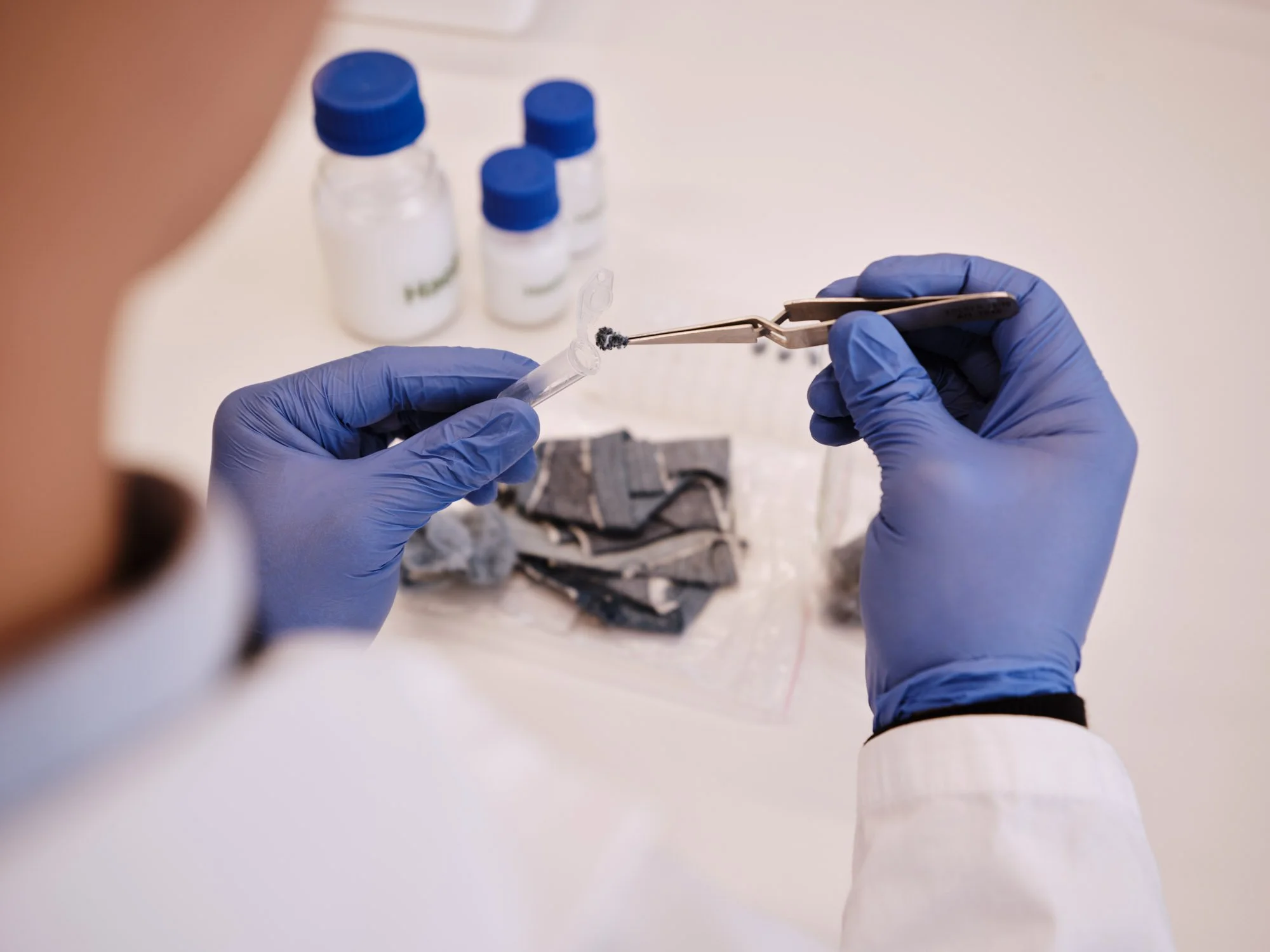
Images courtesy of Haelixa at haelixa.com
Introduction: A New Era of Accountability
Across global supply chains, sustainability claims are under unprecedented scrutiny. Brands routinely reference organic fibers, recycled content, regenerative agriculture, ethical sourcing, and climate-positive materials. Yet regulators, retailers, investors, and consumers are increasingly aligned around a single, sharper question: If you claim it — can you prove it?®
In sectors such as textiles, apparel, personal care, and agriculture, proof can no longer rely on paperwork alone. Transaction certificates, audits, and digital platforms play an important role in documenting supply chains, but they do not physically verify what is inside a product.
As enforcement tightens under frameworks such as the EU Corporate Sustainability Due Diligence Directive (CSDDD), Corporate Sustainability Reporting Directive (CSRD), the Green Claims Directive, and forced-labor regulations globally, brands are discovering a critical gap: digital records without physical verification are increasingly insufficient.
This gap has accelerated interest in physical traceability — approaches that embed verifiable proof directly into materials themselves. Among the technologies helping to lead this shift is DNA-based traceability, which brings forensic science into supply chains and enables claims to be substantiated with physical evidence rather than declarations alone.
Why Paper and Digital Traceability Are No Longer Enough
For decades, supply-chain transparency has relied on documentation: certificates of origin, chain-of-custody records, supplier declarations, and third-party audits. More recently, blockchain systems, digital traceability platforms, and digital product passports have promised end-to-end visibility and improved data integrity.
These tools are valuable — but they share a common limitation.
They record transactions; they do not verify materials.
Haelixa: Bringing Forensic DNA Proof into Supply Chains
Scientific Roots in Switzerland
Haelixa is a Swiss traceability company and a spin-off from ETH Zurich, one of the world’s leading science and technology universities. From its inception, Haelixa has focused on applying forensic science to real-world supply-chain challenges, enabling brands to verify material authenticity and origin with a high degree of confidence.
Rather than relying solely on documentation or digital records, Haelixa uses patented DNA markers derived from Swiss mountain herbs. These markers are applied directly to raw materials — such as organic cotton, recycled fibers, and other preferred inputs — at the beginning of the supply chain.

Applying forensic science to real-world supply chain challenges
“For us, traceability is not about creating more data — it’s about creating credible proof. Physical verification allows brands to move beyond assumptions and documentation, and toward evidence that can be independently checked at any point in the supply chain. That’s why we also value the role of independent, science-led advisors like GenuTrace, who help brands apply physical traceability responsibly and in ways that stand up to real-world scrutiny.”
— Patrick Stumpf, CEO, Haelixa

In practice, this limitation creates risk:
Premium fibers such as organic cotton, recycled materials, and specialty inputs are vulnerable to substitution or blending, even when accompanied by certifications.
Brands may pay a premium for preferred materials without a reliable way to confirm that those materials persist through complex, multi-tier supply chains.
When discrepancies arise, documentation alone cannot conclusively demonstrate what material ended up in the finished product.
High-profile cases of mislabeling and false sustainability claims have shown that even robust audit systems can fail when physical verification is absent. In today’s regulatory environment, these failures carry not only reputational consequences but also legal and financial exposure
Physical traceability addresses this blind spot by embedding verifiable identifiers directly into raw materials, allowing authenticity and origin to be checked at any stage of the supply chain.
Once applied, the DNA markers:
Are invisible and tamper-resistant
Withstand standard industrial processing
Remain detectable through spinning, weaving, dyeing, and manufacturing
Can be verified at multiple points using established laboratory methods
This approach transforms raw materials into physically verifiable assets, carrying proof of origin and authenticity alongside them as they move through production.
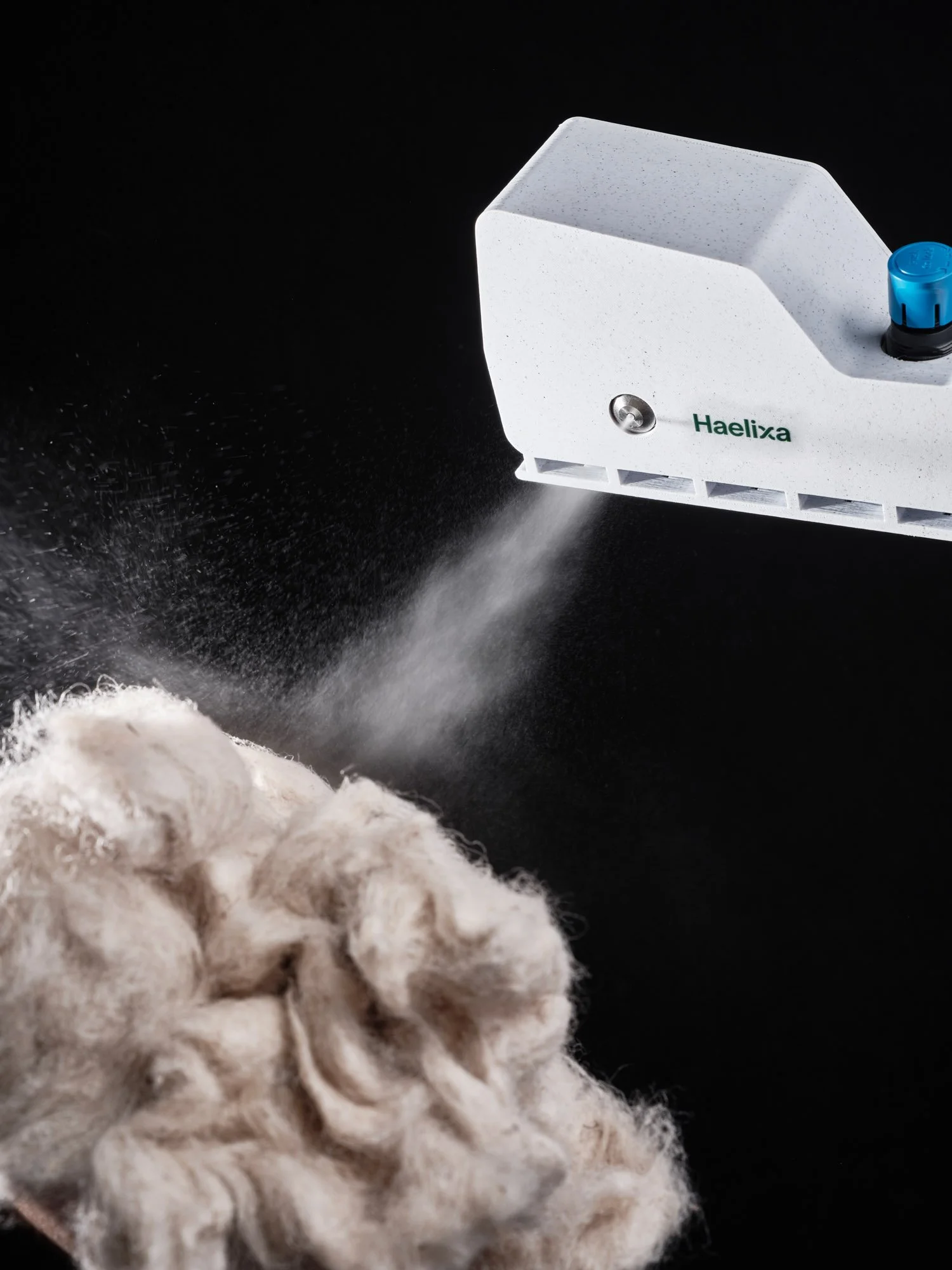
DNA markers are applied through a spray or coating process at the fiber or raw material stage.
How DNA-Based Traceability Works
Haelixa’s DNA markers are typically applied through a spray or coating process at the fiber or raw-material stage. Each marker functions as a unique identifier associated with a specific origin, sourcing program, or material claim.
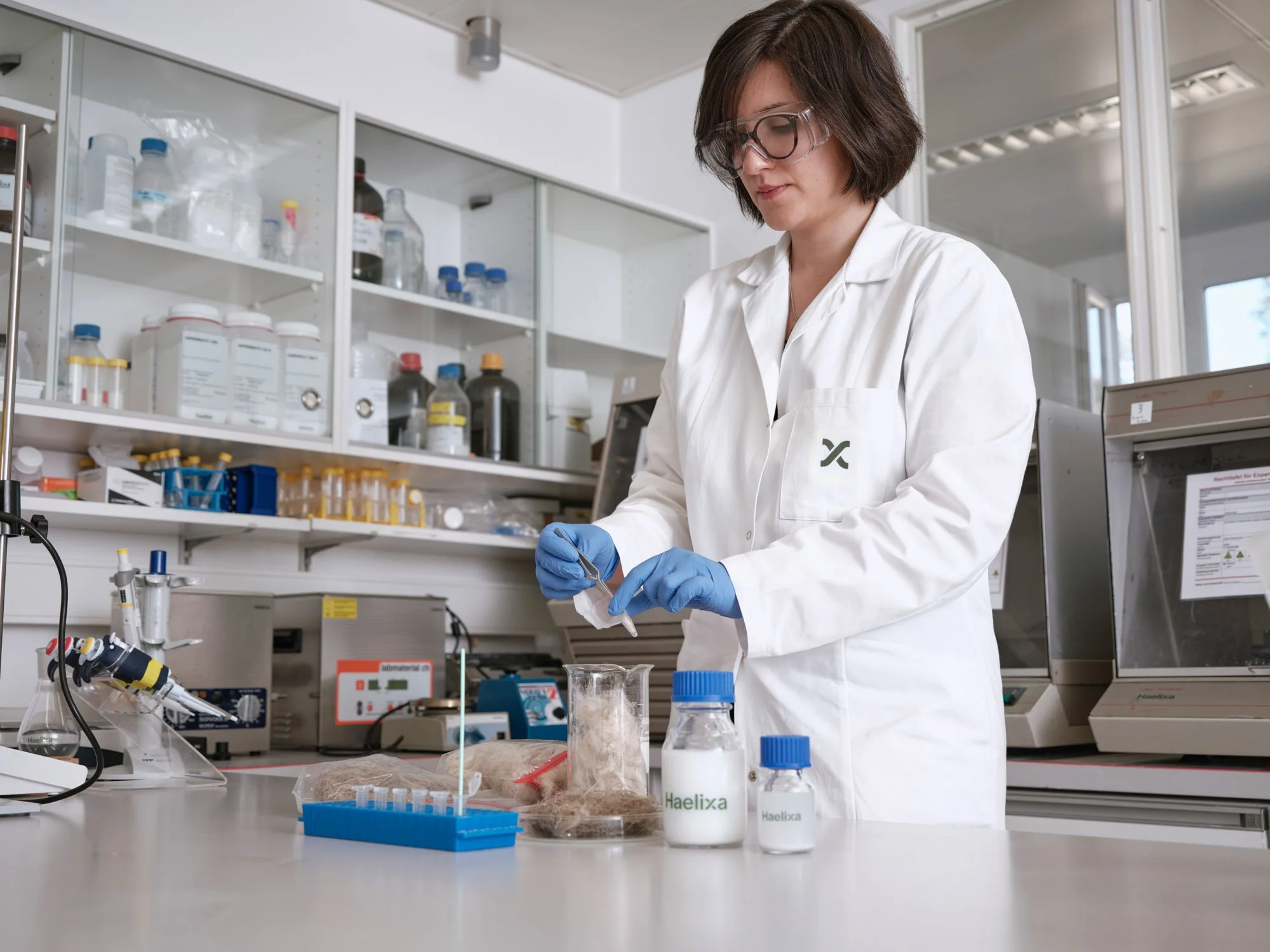
Verification is conducted using widely accepted molecular biology techniques, such as quantitative polymerase chain reaction (qPCR). These methods allow laboratories to determine whether the marker is present, providing clear and defensible confirmation of authenticity.
Importantly, this process:
Does not alter the performance or quality of the material
Is compatible with leading standards such as GOTS and OEKO-TEX®
Produces unambiguous results that are straightforward to interpret
In 2024 alone, Haelixa traced millions of garments globally, working with international brands and manufacturers. While the technology was initially developed for textiles, its application has expanded into other materials where provenance, fraud prevention, and claim verification are critical.
Complementing — Not Replacing — Digital Systems
Haelixa positions DNA-based traceability as a complement to digital traceability, not a replacement. Digital platforms are essential for managing data, reporting, and consumer communication, but their credibility ultimately depends on the quality of the underlying evidence.
By providing physical proof of origin, DNA markers anchor digital records to verifiable reality. When verification results are linked to digital platforms — such as certificates of analysis, QR codes, or digital product passports — brands can connect physical evidence with transparency initiatives aimed at regulators and consumers alike.
Why Physical Traceability Is Becoming Non-Negotiable
Regulatory Expectations Are Rising
Regulators are moving beyond voluntary sustainability reporting toward enforceable due-diligence and substantiation requirements. Under emerging legislation, companies are expected to demonstrate that claims about origin, environmental impact, and ethical sourcing are accurate and verifiable.
Physical traceability supports these expectations by:
Verifying material authenticity rather than relying on supplier intent
Enabling risk-based due diligence across complex supply chains
Providing defensible evidence during audits, investigations, or disputes
For large organizations, the financial implications of non-compliance — including fines, recalls, and supply disruptions — can be substantial.
Structural Risk in Global Supply Chains
Multi-tier supply chains inherently create opportunities for substitution, blending, or misrepresentation, particularly where premiums are paid for preferred materials. Even well-designed audit programs may struggle to detect these issues without physical verification.
DNA-based traceability functions both as a deterrent, discouraging substitution, and as a detection mechanism, enabling targeted investigation when questions arise.
From Storytelling to Proof
Consumers increasingly expect transparency, but they are also more skeptical of unverified claims. As awareness of greenwashing grows, trust is shifting from narratives to evidence.
Physical traceability enables brands to move from storytelling toward story-proving — substantiating claims with material-level proof.
Making Physical Traceability Work in the Real World
While DNA-based traceability offers powerful capabilities, it is not inherently plug-and-play. Its effectiveness depends on how it is designed, deployed, and interpreted within real production environments.
Brands must consider questions such as:
Which claims truly require physical verification?
At what stage should markers be applied — fiber, yarn, or fabric?
How frequently should verification occur?
How should results be interpreted and communicated responsibly?
As adoption of physical traceability grows, many organizations recognize the value of independent, science-led expertise to help integrate these tools into broader compliance and traceability strategies.

From fiber to finished product: GenuTrace is a supply chain traceability consultancy that works with brands, mills, and material producers across textiles and agriculture. Rather than offering proprietary marking technologies, GenuTrace supports organizations in evaluating and responsibly implementing physical verification tools — including isotope testing and DNA-based solutions — alongside digital systems and regulatory requirements.
The Importance of Scientific Context and Interpretation
Deploying physical traceability without sufficient scientific context can introduce new risks, from over-claiming results to misunderstanding what verification data can and cannot demonstrate. Independent expertise helps ensure that physical traceability strengthens supply-chain integrity rather than creating false confidence.
GenuTrace’s work is grounded in forensic science, regulatory awareness, and real production conditions. This perspective is shaped by decades of experience in material verification and origin testing.
From Fiber to Finished Goods: Proof That Travels with the Product
At the center of this work is MeiLin Wan, Founder and CEO of GenuTrace, whose career has focused on DNA-based traceability, molecular tagging, and origin verification across global cotton and textile supply chains.
Her experience includes building large reference datasets, working with accredited laboratories, and advising brands and regulators on how physical traceability should be applied as a verification tool — not as a shortcut to determination.
“What makes technologies like Haelixa’s DNA markers so powerful is their ability to carry provenance with the material itself — from farm to finished product. In a world where claims are increasingly scrutinized, physical traceability provides the missing link between sourcing intent and verifiable reality across complex supply chains.” — MeiLin Wan, Founder & CEO, GenuTrace

When DNA-based traceability is applied thoughtfully, physical proof can travel with a product from its point of origin through processing and manufacturing to the finished good.
Combined with digital systems, physical verification helps brands strengthen confidence in material claims, reduce exposure to sourcing and compliance risk, and support credible communication with regulators, partners, and consumers.
The Future of Traceability Is Physical + Digital

The future of traceability will not be digital alone. It will be physical and digital, working together — turning claims into proof and transparency into trust.
As sustainability and sourcing claims face increasing scrutiny, the question for brands is no longer whether traceability matters — but whether their systems can withstand real-world testing.
DNA-based physical traceability, as demonstrated by Haelixa, offers a powerful way to anchor transparency in verifiable evidence. When combined with responsible implementation, scientific interpretation, and integration into digital systems, physical proof can support more credible, resilient supply chains.
Haelixa Contact Name
📧 b.coimbra@haelixa.com | 🌐https://haelixa.com/ | 🔗linkedin.com/company/haelixa/
“If you claim it, can you prove it?”® GenuTrace ensures you can.
Contact GenuTrace to start verifying at the source:
📧 sales@genutrace.com | 🌐 www.genutrace.com | 🔗linkedin.com/company/genutrace
