
Cotton Without Fields: Can We Verify It?
GENUTRACE INSIGHTS SERIES
This article is part of GenuTrace Insights, an ongoing series exploring the forces reshaping supply chain traceability, risk and compliance, featuring perspectives from GenuTrace’s team and expert contributors.
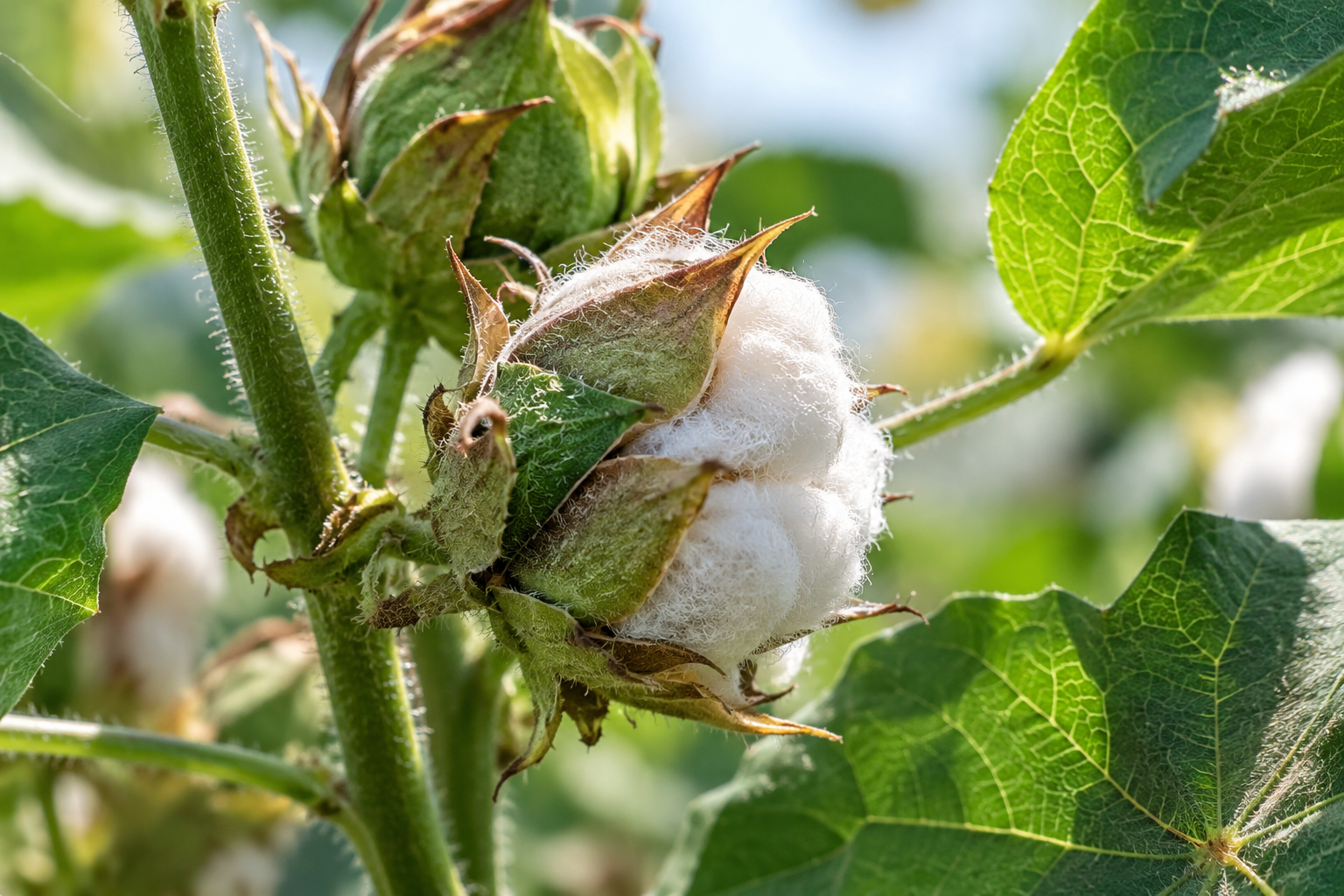
Cotton has always been tied to land. Soil, rainfall, climate and farming practice shape every bale, and for decades those links have defined how the industry thinks about sourcing, risk and origin.
That link is starting to break. In Spain, India and Portugal, companies are cultivating cotton without soil, in controlled systems that can operate on a rooftop, in a desert or fully indoors1,2. The first commercial batches have already been made into garments.
It is a genuinely promising innovation. It also raises a question the industry needs to answer early: when cotton is no longer tied to land, how do we prove where it came from?
Cotton moves indoors
Hydroponic cotton grows in circulating water rather than soil.
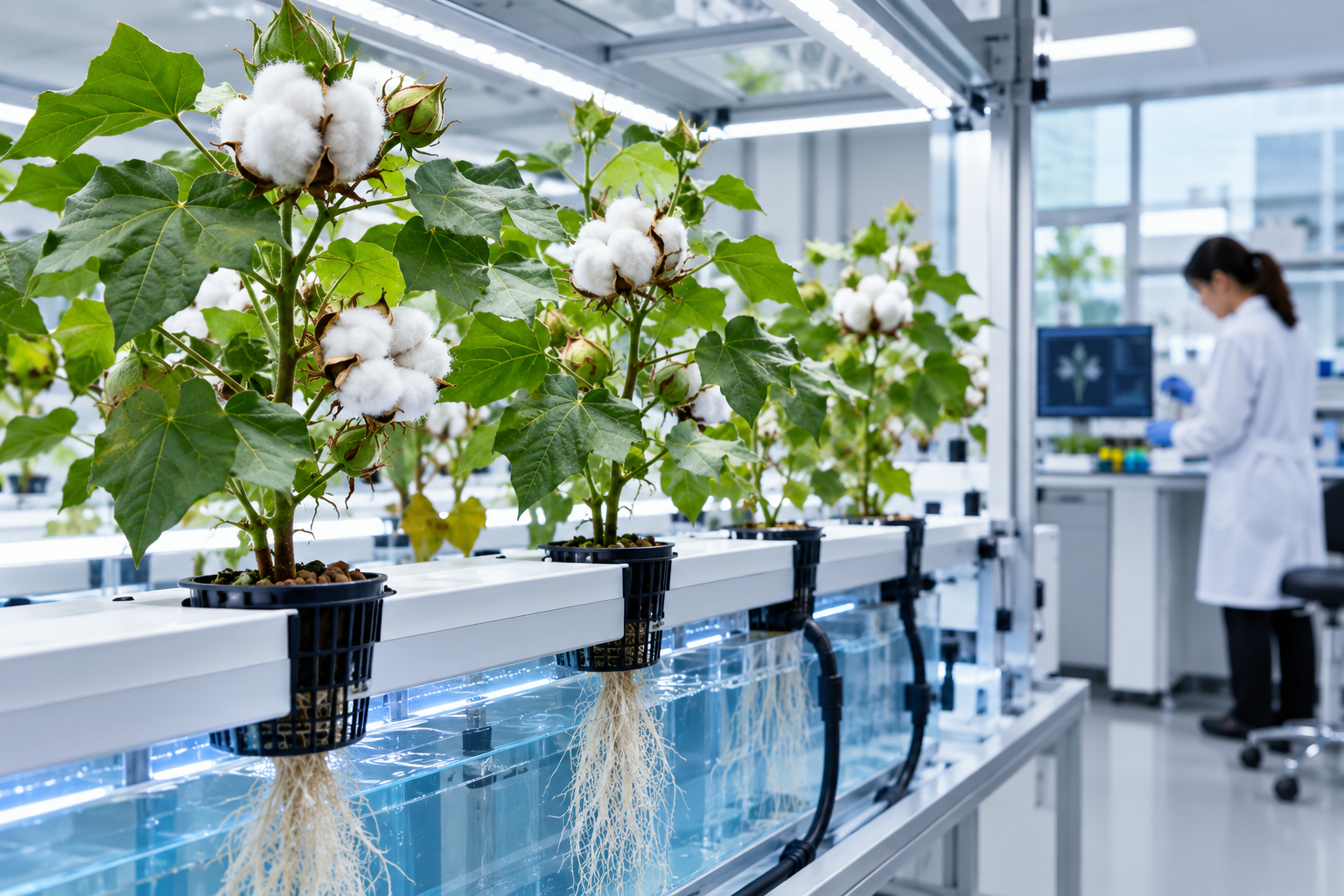
One recently announced project is a partnership between H&M Group’s Circular Innovation Lab and Spanish hydroponic-farming company Magtech. Cotton roots sit in circulating water, each plant receives a precise nutrient mix, and water is recovered and reused in a closed loop that keeps nutrients out of nearby rivers. The plant can partly tolerate saltwater and wastewater, so lightly treated water can replace fresh supply¹.
The aim is to reduce cotton's demand for water, fertilizer, pesticides and arable land that could otherwise grow food. Because the system needs only sun and a reasonable water source, it can be set up almost anywhere.
Hydroponic growing is not new. It has been used for decades to produce vegetables, herbs and other crops. Even applying it to cotton has been tried before: HKRITA and Materra have explored soilless and controlled-environment cotton, though mostly demonstrating what was technically possible¹. What is new is the push to make it commercially viable. The barrier to scale has been labor: scouting plants, judging when each boll is ready, treating pests and picking by hand. One hectare of the Magtech system holds roughly 30,600 plants across 52 channels, more than any technician can monitor consistently.
This is where AI comes in. Cameras monitor the crop continuously, judging ripeness and spotting infestations early so that treatment is applied only to the plants that need it. The partners are also developing robotics to automate the harvest¹.
The results have already moved beyond the lab. The first five-tonne batch passed quality checks in Spain and has since been made into garments, and a second site is now being set up in India¹.
Not just one project
Controlled-environment cotton is emerging across multiple countries.
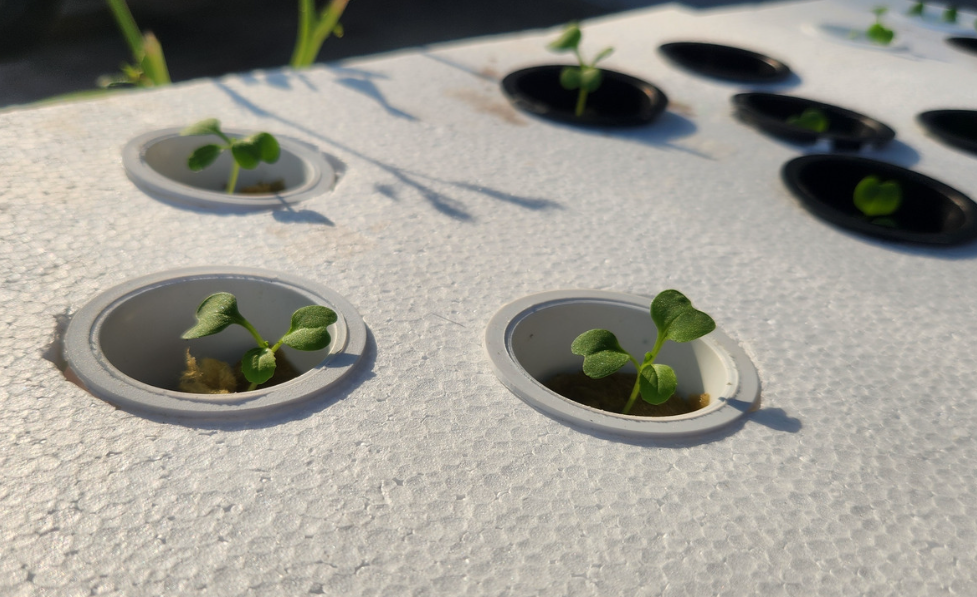
In Portugal, start-up Agromethod Labs has partnered with textile technology center CITEVE on hydroponic cotton. A mini pilot has already produced yarn, and a larger pilot will incorporate vertical farming⁴. This model is designed to run fully indoors, independent of sunlight, with the potential for three or four harvests a year. Because costs are higher, early output will target specialized, premium markets.
The ambition is explicitly about origin. The project aims to produce a T-shirt that can be marketed as made with Portuguese-grown cotton, positioning Portugal to host the entire cotton value chain within a single country⁴.
The growing systems differ, but the direction is the same. Cotton is moving away from the land that has always defined it, and it is arriving with origin claims attached.
Measured claims, independent validation
What stands out in the H&M and Magtech project is its discipline. Magtech co-founder David René Rodríguez has said the partners are not claiming zero impact or trying to replace conventional cotton. The goal is to “demonstrate, quantify and independently validate a complementary way to grow it”¹.
The H&M Foundation is equally clear that the full environmental gains still need confirmation through an independent life-cycle assessment.
It also frames the shift as a just transition question: cotton supports the livelihoods of millions of farmers and workers, and hydroponic systems will still need growers, agronomists and technicians¹.
Notably, Rodríguez’s path to hydroponics began with traceability. Before founding Magtech, he worked in cotton supply chains in Tunisia and Bangladesh, where he saw how little traceability existed at the cultivation stage³.
A growing method born from a traceability gap should be built with traceability in from the start.
A new verification question
When cotton is no longer tied to land, origin needs a new kind of proof.

Forensic origin testing relies on environmental signals a plant absorbs from its surroundings. Several of those signals come from local soil and geology. In a hydroponic system, they come instead from nutrient solutions, and how distinctive those signals are depends on how each system is set up, including its nutrient formulation, water source and growing environment. Sites using similar inputs may look alike, while sites built differently may not.
Water adds another layer. If a facility uses treated wastewater or brackish supply rather than local groundwater or rainfall, the water signal in the fiber may reflect how the site is engineered as much as where it is located.
Fully indoor systems go further still. When temperature, humidity, light and water are all controlled, the environmental signals in the fiber may reflect the facility's settings more than its geography. A “grown in Portugal” claim for indoor cotton cannot rely on the same evidence as a regional claim for field-grown cotton.
Reference libraries built on field-grown cotton were not designed for this material. Verifying controlled-environment cotton will require purpose-built reference data and, in some cases, a different approach altogether.
New ways of growing cotton need new ways of proving it.
Building an evidence ecosystem
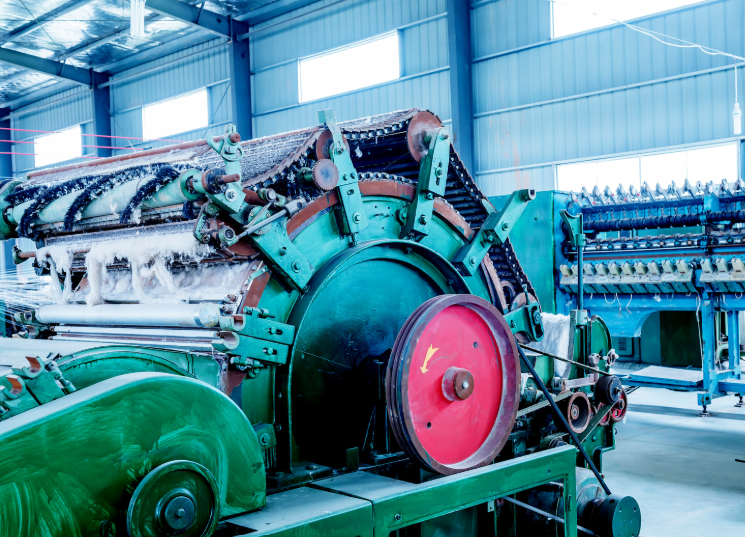
Hydroponic cotton does not stay in a separate supply chain. Magtech gins its cotton and sells it in standard bales to spinning mills, where it enters the same distribution chain as conventional fiber³. Once it reaches the mill, it can be blended like any other bale.
That is where the risk sits, and it points to where verification belongs: at the source, before the fiber enters the mainstream supply chain.
A controlled site makes traceability possible. It does not prove it once the fiber leaves the building.
The answer is not a single test, but a verification approach designed around how and where the cotton is grown.
That is the idea behind an evidence ecosystem: a layered approach that combines recorded data, such as documentation and digital traceability records; observed data, such as site inspections and monitoring; and measured data, from scientific analysis of the material itself5. No single source has to carry the claim alone. Scientific verification serves as the golden thread, linking the physical fiber to the claims made about it.
Controlled-environment cotton is well suited to this approach. With a small number of sites, each run by a single operator, growing conditions, inputs and output can be documented and observed at the source with unusual precision. Measured data then confirms that the fiber reaching mills and factories is consistent with what was established there. Where one line of evidence is weaker, as environmental signals may be for hydroponic cotton, the others carry more of the weight.
Fiber quality adds another consideration the industry has not yet discussed much. Early batches have passed quality checks1, but it remains to be seen how consistently hydroponic cotton performs across harvests and sites, and whether brands will blend it with field-grown cotton to meet performance or cost targets. If they do, a single claim becomes several: where each fiber came from, and in what proportion. That calls for multiple points of evidence, not one.
Regulation is moving in the same direction. Under the EU’s Corporate Sustainability Due Diligence Directive, companies are increasingly assessed not on whether due diligence processes exist, but on whether they can demonstrate that risks are being identified, mitigated and monitored in practice5.
Key takeaway: Proof starts at the source and lives in the data.
The opportunity

Hydroponic cotton does not need to replace conventional cotton at scale to matter. Some products are not constrained by volume and may benefit most from a controlled, consistent fiber: medical and hygiene textiles, baby and personal care products, and limited-run luxury or locally made collections. Early output is already expected to go to specialized, premium markets4. These are also the categories where claims carry the most weight, whether about purity, origin or how a product was made, and where the evidence behind them will face the closest scrutiny.
If hydroponic cotton earns a sustainability premium, it will also attract substitution. Conventional fiber labeled as hydroponic would undermine the very claims these projects are working to establish. Premium pricing and country-of-origin claims make verification more valuable, not less.
None of this is a reason to hold back. Controlled-environment cotton is part of the future of the fiber. Verifying it will mean considering multiple options, supported by multiple points of evidence.
Building verification in from the start is far easier than retrofitting it after the supply chain has scaled.
Innovation in how cotton is grown should be matched by innovation in how it is proven.
References
¹ H&M Foundation, Why the future of cotton might not need a field, September 9, 2026. https://hmfoundation.com/2026/09/09/why-the-future-of-cotton-might-not-need-a-field/
² Angela Velasquez, H&M-Backed Cotton Project Explores Soil-Free Farming, Sourcing Journal (SJ Denim), September 24, 2026. https://wwd.com/sourcing-journal/sj-denim/hm-magteech-cotton-project-explores-soil-free-farming-1239257830/
³ Texas A&M AgriLife Organic, Hydroponic Cotton (republished from USA News Site, September 3, 2023). https://agrilifeorganic.org/hydroponic-cotton/
⁴ FashionNetwork / Portugal Têxtil, Hydroponic cotton cultivation begins in Portugal, December 2025. https://www.fashionnetwork.com/news/Hydroponic-cotton-cultivation-begins-in-portugal,1789535.html
⁵ Kelly Thompson and MeiLin Wan, From Traceability to Proof: What CSDDD Omnibus Reform Means for Global Supply Chains, Fashion Business Journal, April 23, 2026. https://bjournal.net/what-csddd-omnibus-reform-means/
ABOUT THE AUTHOR
MeiLin Wan is Founder and CEO of GenuTrace LLC. She has over two decades of experience in supply chain verification using stable isotope analysis, DNA tagging, genomic testing and tracer fiber methodologies, with a track record across major retailers.
LinkedIn: https://www.linkedin.com/in/meilinwan/
ABOUT GENUTRACE

GenuTrace’s mission is simple: move companies from marketing claims to verified reality with independent, science-based traceability, origin verification, and risk assessment and due-diligence solutions built to withstand scrutiny.
No greenwashing. No guesswork. We bring the science. The data. The strategy. You bring the supply chain.
GenuTrace combines forensic testing, digital traceability, and strategic consulting to deliver real clarity and control over complex supply chains.
We don’t just test. We design and help to build tailored systems around your materials, your risk profile, and your goals.
It’s the question we ask in every episode of the GenuTrace Insights video series: If you claim it, can you prove it?®
